Prepare
Complete evaluation, review medication teaching and confirm the cycle plan.
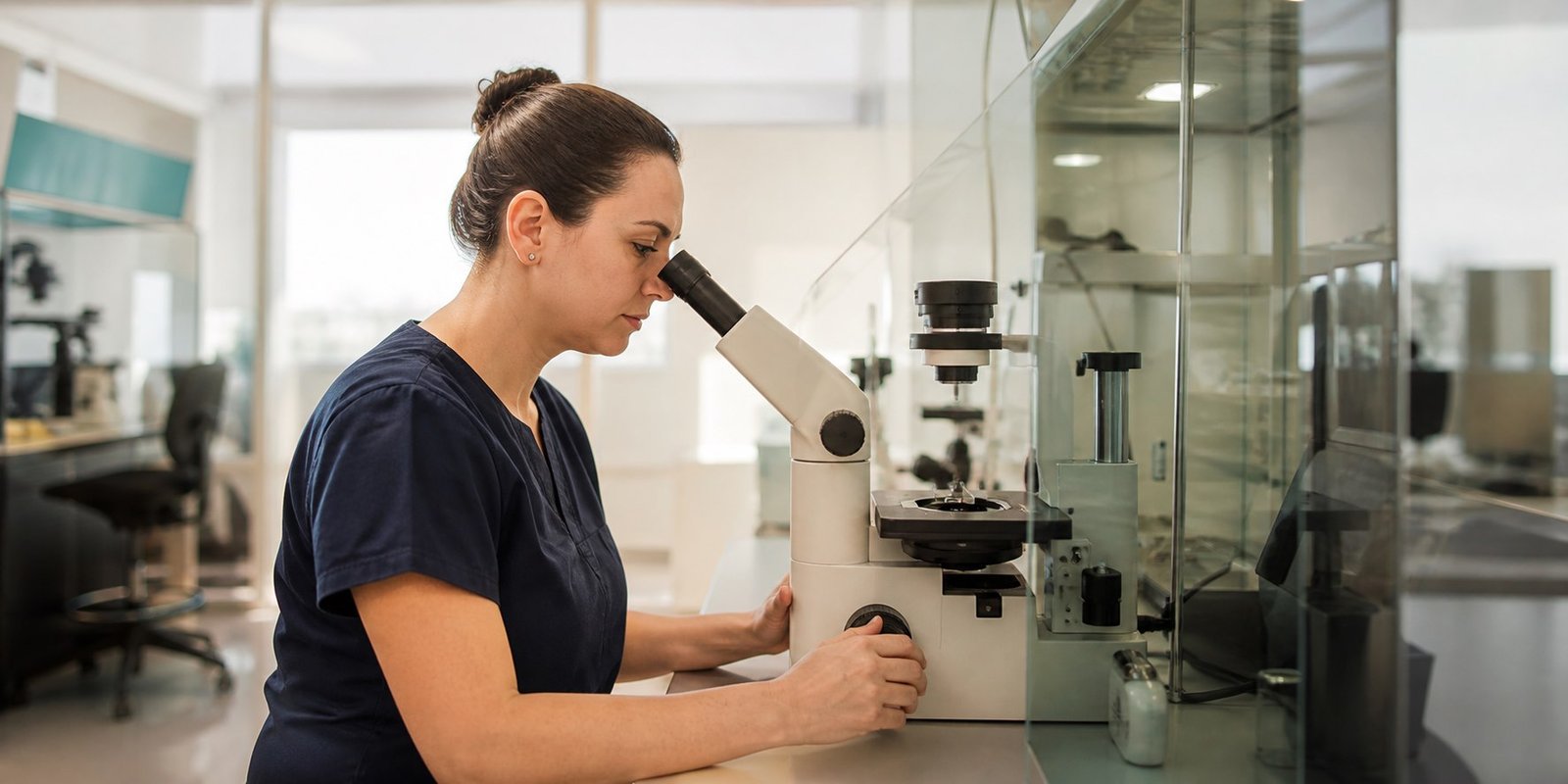
IVF is a sequence of carefully timed clinical and laboratory steps. Your plan also needs to account for diagnosis, ovarian response, sperm factors, family-building goals, prior treatment and the decisions you may face along the way.
Talk with our team ↗Exact timelines vary. This overview shows the rhythm of a typical cycle so the process feels easier to understand before it begins.
Complete evaluation, review medication teaching and confirm the cycle plan.
Medication supports follicle growth while ultrasound and bloodwork monitor response.
Eggs are collected during a brief procedure and transferred to the laboratory.
Eggs and sperm are combined through the approach selected for your plan.
Inside the laboratory
Embryology involves controlled environments, careful identification, observation and communication with the clinical team. We help you understand the milestones without turning every update into a mystery.
IUI places prepared sperm in the uterus around ovulation. IVF involves ovarian stimulation, egg retrieval, fertilization in the laboratory and embryo transfer. Your physician explains why one approach may be more useful than another.
May be considered in selected situations involving ovulation, sperm use or unexplained infertility.
Provides more information and options across fertilization and embryo development.
Diagnosis, age, prior history, time and family goals all matter to the recommendation.
IVF questions
The stimulation and retrieval portion often spans a few weeks, but preparation, testing, embryo development, genetic testing when used, and transfer timing can make the full path longer.
Not everyone uses preimplantation genetic testing. The decision depends on the specific question being asked, clinical context, preferences and an understanding of limitations.
Yes. Monitoring shows how your body is responding, and medication doses or timing may be adjusted to support safety and the goals of the cycle.